The quiet art of stacking rings
A good stack looks effortless, but there is a little structure underneath. Five principles our stylist uses in every appointment.

Most people who come to me for help with stacking already own the right rings. They have simply been wearing them all on the same finger, or all on different ones. A stack works when the pieces talk to each other, and that comes down to a few simple choices.
1. Start with an anchor
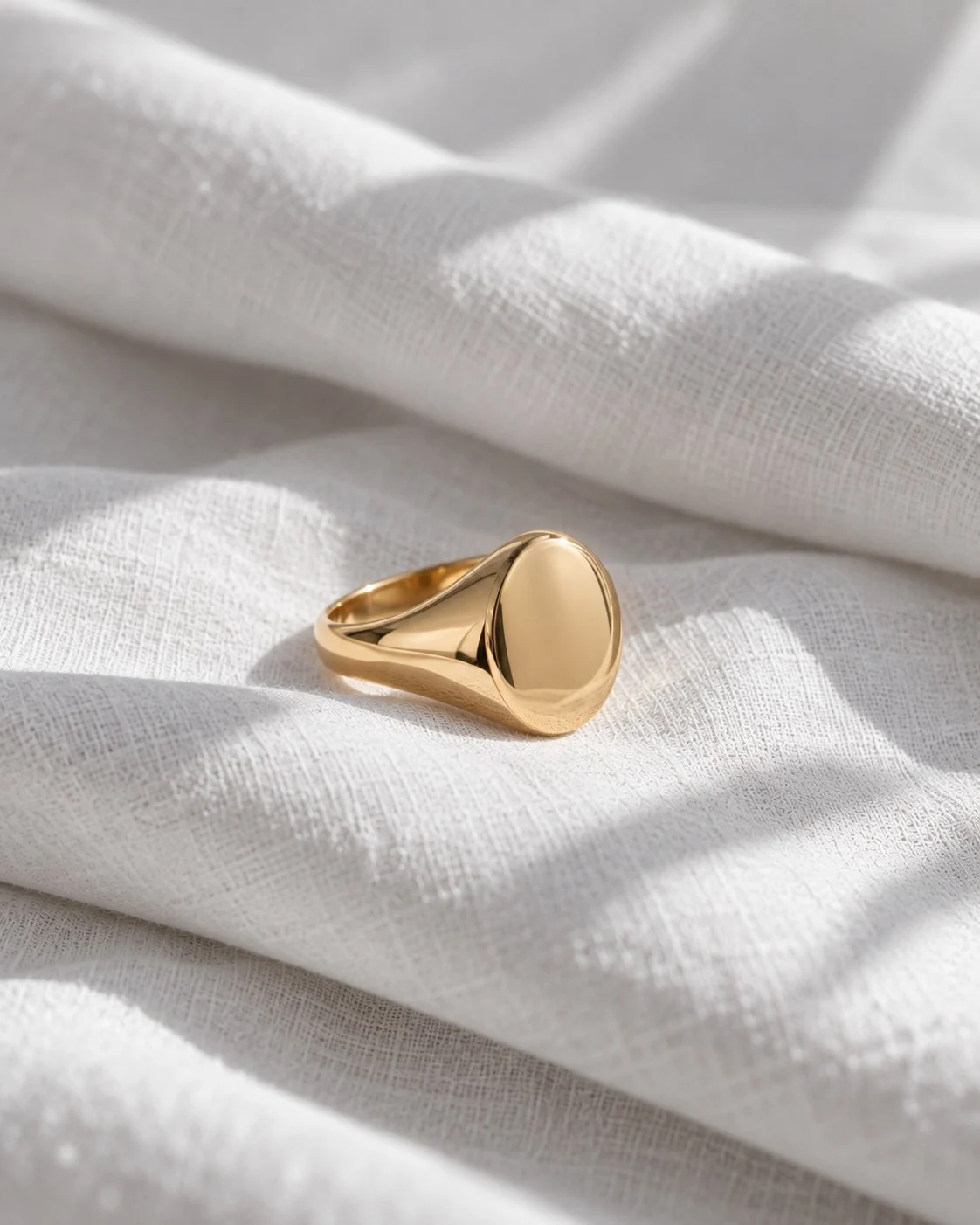
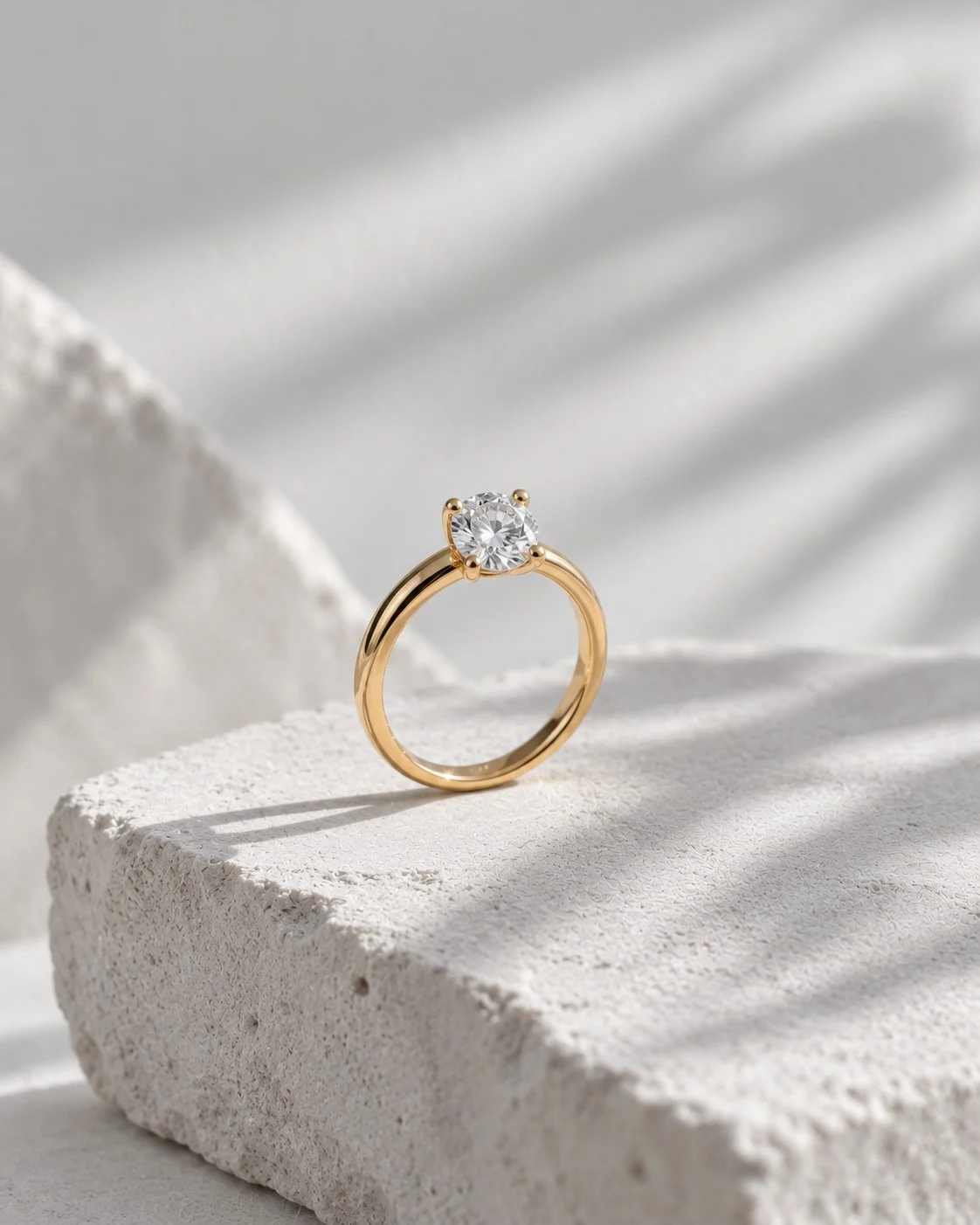
Choose one piece that carries the stack: a solitaire, a signet, or the ring you never take off. Everything else is built around it. On most hands that anchor sits best on the ring finger or the middle finger.
2. Vary the width
Three bands of the same width read as one thick band. Mix a fine 1.8 mm band with something heavier, like the 2.2 mm Nova signet, and the eye can pick out each ring. Contrast in width matters more than contrast in colour.

3. Leave space
Not every finger needs a ring. One empty finger between two stacks gives the hand room to breathe and makes each piece look intentional. My own rule is no more than three fingers on one hand.
4. Mix textures, not too many metals
A mirror-polished signet next to a stone-set band is more interesting than two polished bands. You can mix yellow and white metals, but keep one dominant so the stack feels calm rather than busy.
If you have to explain the stack, take one ring off.
5. Size for the stack
Rings stacked together feel tighter than the same rings worn alone. If you plan to wear three or more on one finger, go up a quarter size on the middle ring. Our free first-year resizing is there if you get it wrong.
- Everyday: Aure on the ring finger, Nova on the little finger.
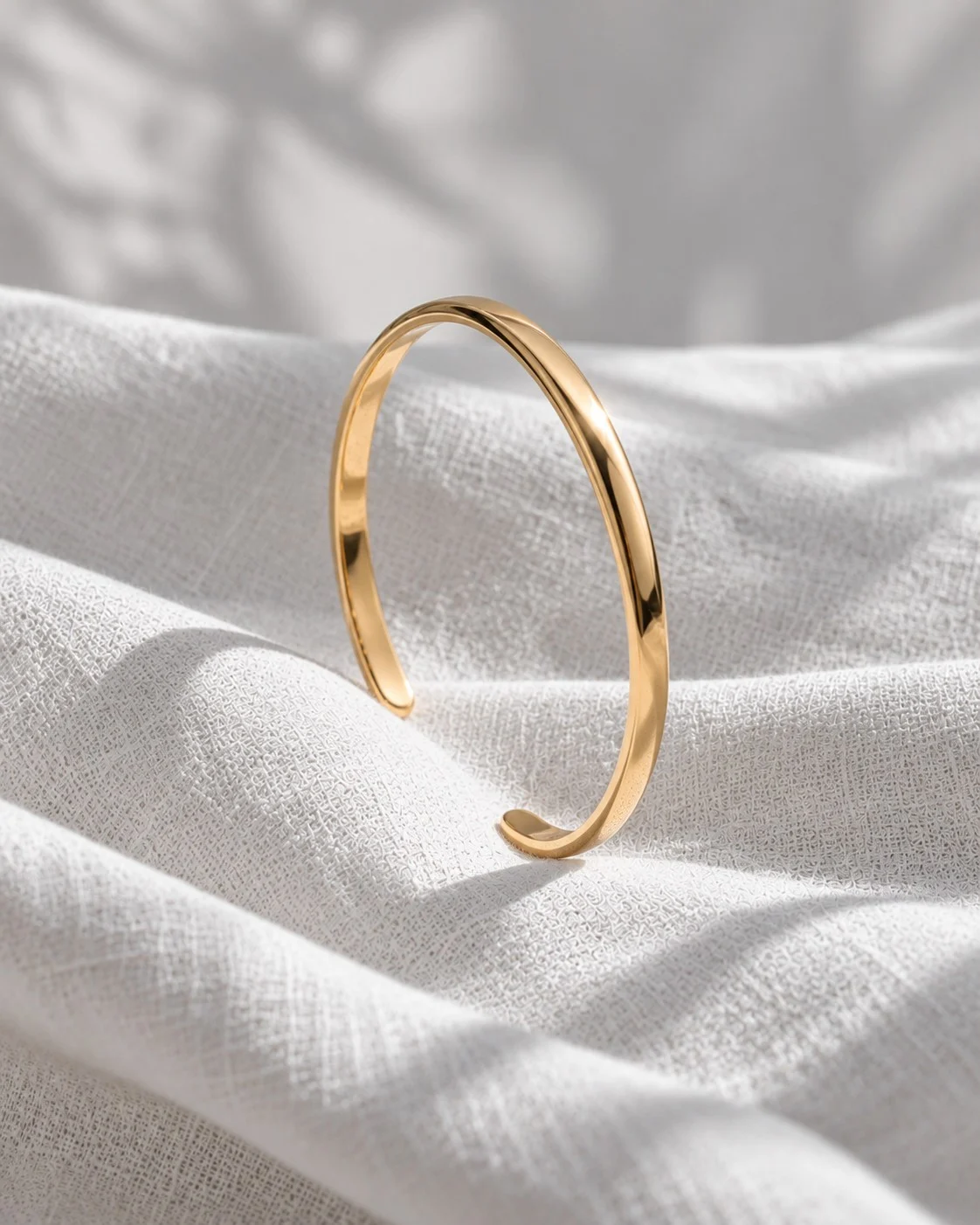
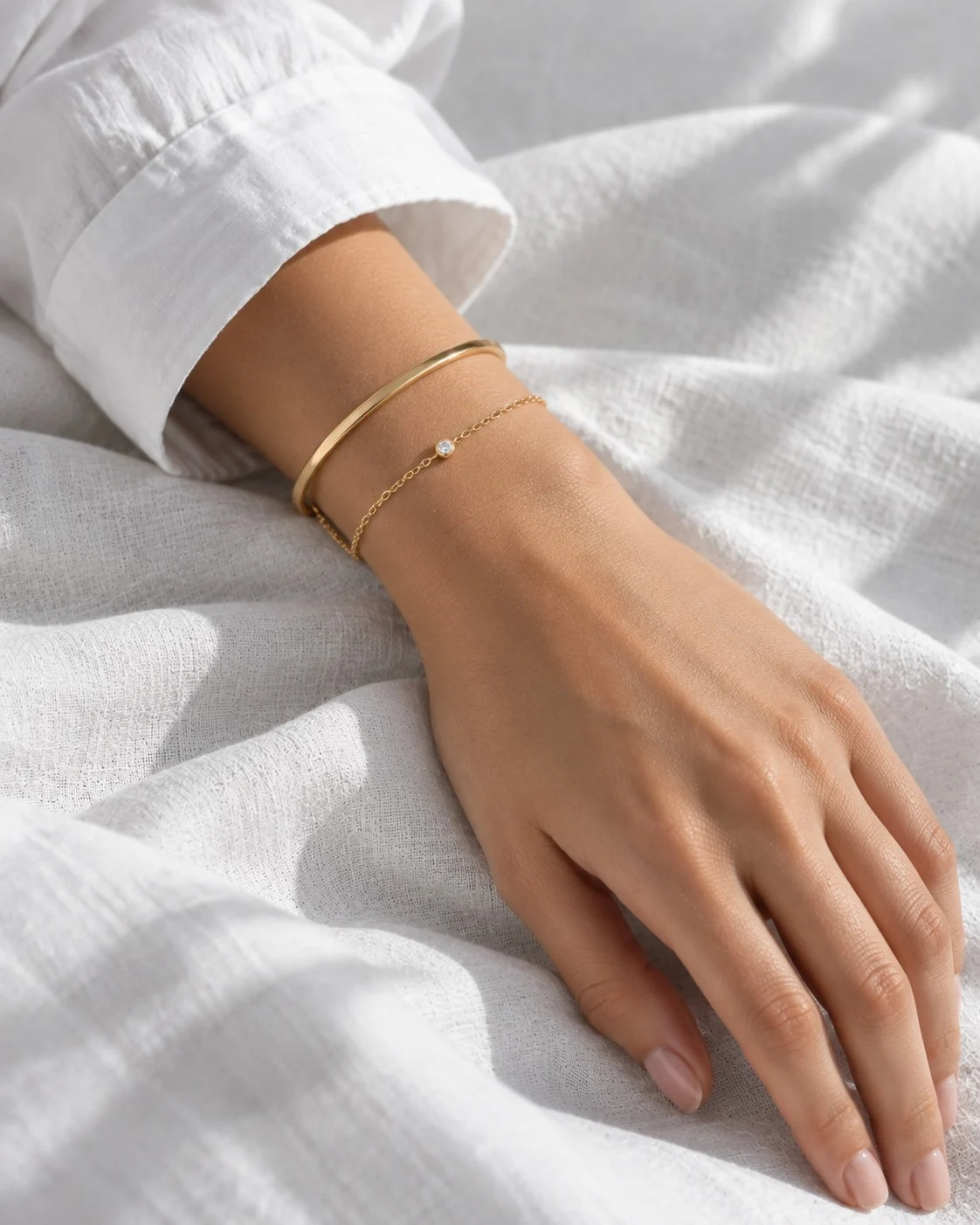
- Evening: Aure with a fine band either side, and the Arc cuff on the same wrist.
- Minimal: Nova alone, on the index finger.
Filed under Style